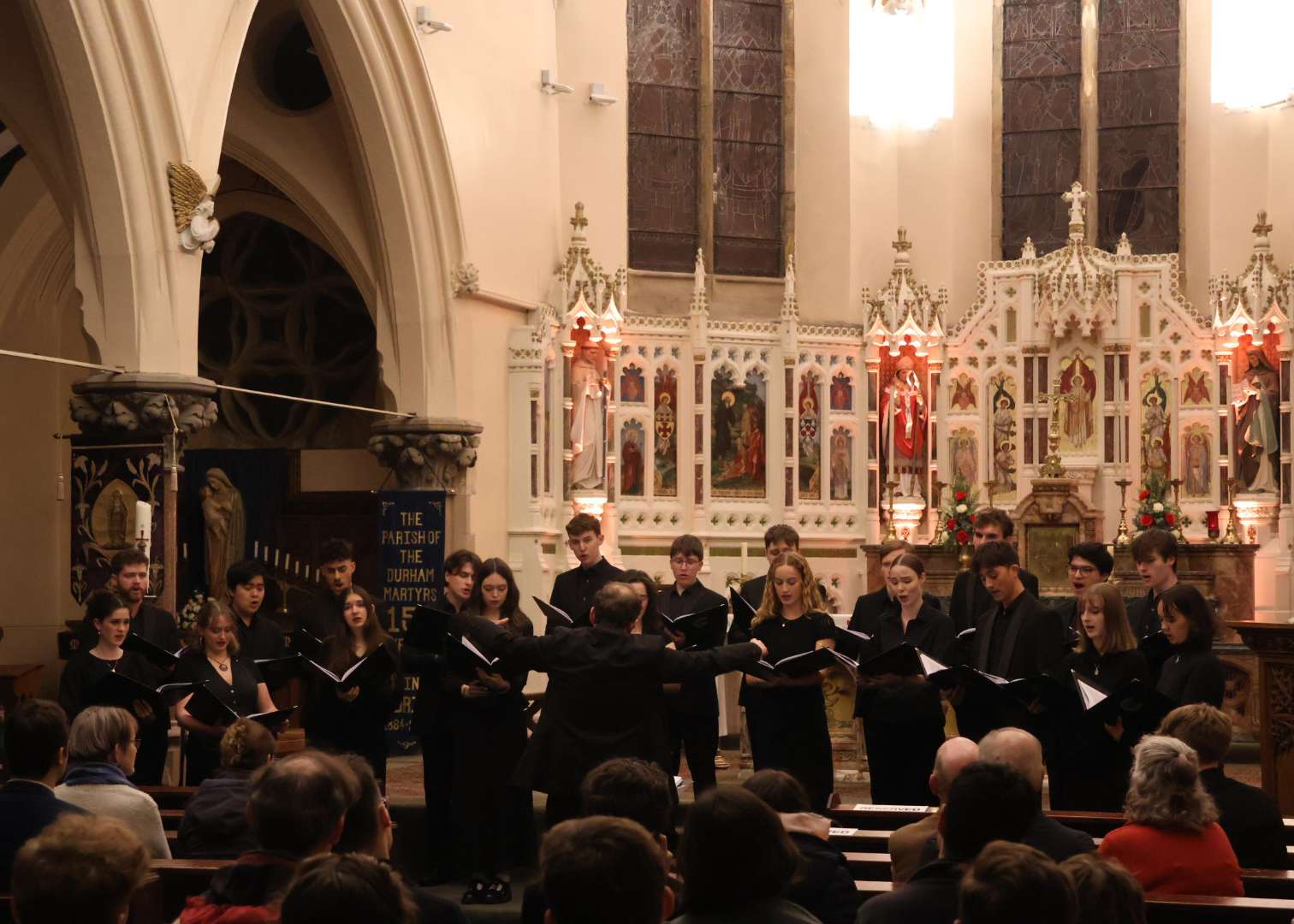
On paper, Durham University Chamber Choir’s Michaelmas term concert programme looked great: a survey of German Lutheran choral music that would trace its development from Heinrich Schütz to Johannes Brahms, taking in J.S. Bach and Felix Mendelssohn en route. And yes, we got this, but another story also gradually revealed itself as the concert progressed – a journey that starts as life draws to an end, and moves through doubt and judgement and ends with heavenly choirs. (I was singing The Dream of Gerontius a few weeks ago and so was inclined to see this as a Protestant version of the same ideas).
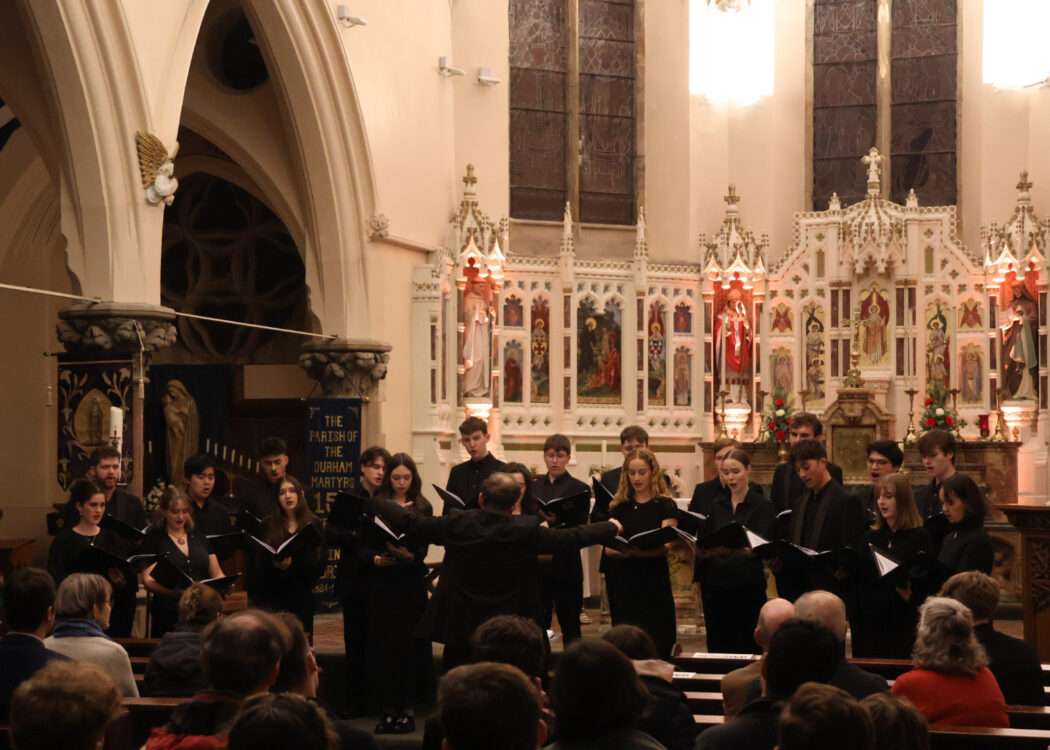
DUCC have moved to a new model this term with James Weeks now engaged as their Professional Conductor, with a student Associate Conductor, Louis Allen, working alongside him. Whilst I have very much enjoyed seeing the variety of student conductors over the years, this move takes the choir to a more professional level, in line with the country’s other top university chamber choirs such as the Oxbridge Schola Cantorum groups and it gives the singers and Durham audiences the benefits of James Weeks’ exceptional abilities as a conductor.
The programme began in 1648 as Germany was emerging from the utter horror of the Thirty Years War. As Weeks explained, Schütz’s genius was in giving a German flavour to the ornate Italian baroque style, crafting it to fit the German language and the more sober Lutheran theology – and perhaps too, the mood of the day. I’ve often dismissed Schütz as just being not-quite-Bach-yet but the way DUCC sang three of his motets this evening has changed my mind.
The opening two Schütz motets, Herr, auf dich traue ich (Lord I trust in you) and Ich bin ein rechter Weinstock (I am the true vine) set the standard for the rest of the evening, with clear lines, nice contrasts and above all an emotional response to the texts. There were some imbalances in the choir’s blend at the beginning of the concert, with one or two voices standing out a bit too much, but this settled down as the programme went on.
After a beautifully peaceful end to the second Schütz piece, we moved to the bleak opening pleas of Bach’s Komm, Jesu, komm (Come, Jesus, Come) The repeats of the word ‘Komm’ were beautifully poised and built up nicely into the tortured, sinuous lines of the opening section. The transition into the more positive ‘Du bist der rechter Weg’ was very carefully crafted and extremely effective.
At the heart of the programme stood Brahms’ masterpiece Warum ist das Licht gegeben dem Mühlseligen (Why is the light given to him that is in misery), setting Biblical texts from Job, Lamentations and the Epistle of James, plus a chorale by Luther that reflect Brahms’s own agnosticism and doubts about death. The word ‘Warum’, ‘Why’ punctuates the opening chorus and on each iteration the choir gave it a different colour and shape; the final one faded away in a stunning diminuendo and a pianissimo repeat. The choir sang the final lines of this section with a slight hesitancy and exploratory feeling that perfectly illustrated the doubt expressed in the text. The following sections were calm and gentle, giving release after the questions and ending with a chorale that was both precise and sincere.
James Weeks said in his introduction that the answer to Brahms’s doubts come in the motet by Schütz which followed – Selig sind die Toten (Blessed are the dead – incidentally a text that Brahms himself chose to set to close his German Requiem). The choir moved straight into this without a break. The questioning and uncertainty of the Brahms hung over the opening section of this until the choir broke out confidently into ‘Yes, says the Spirit’. It was a lovely transition and a genius bit of programming.
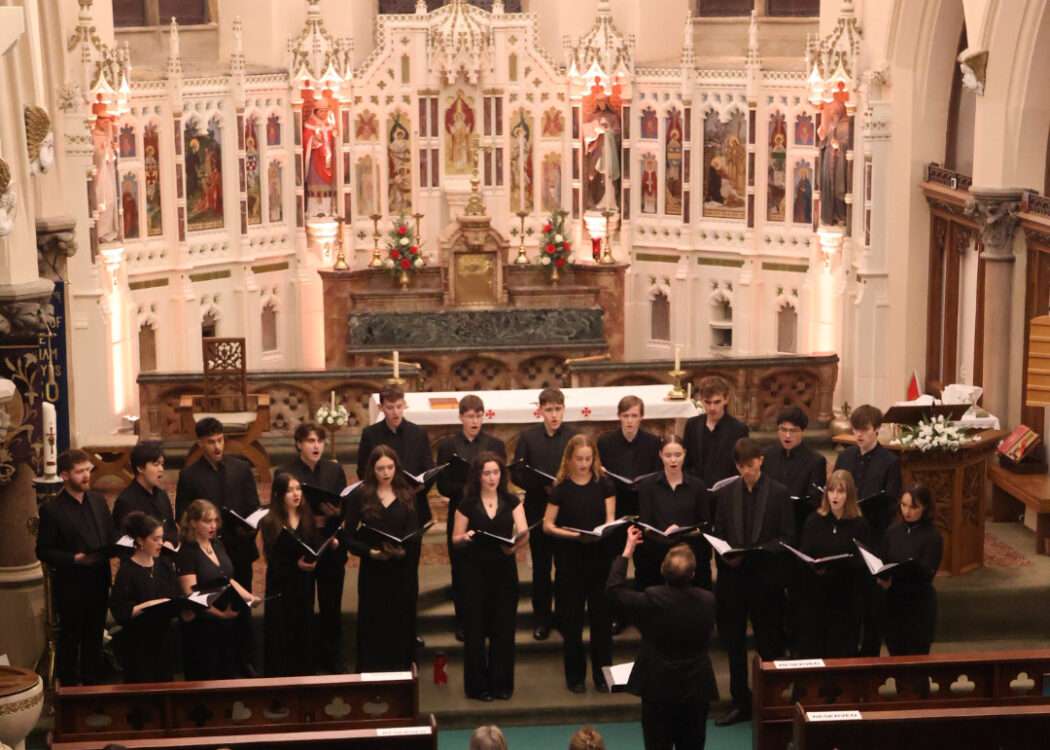
At this point, Louis Allen took over the conducting for our soul’s journey past death, starting with two motets by Felix Mendelssohn: Herr nun lässest Du Deiner Diener in Frieden fahren (the German text of the Nunc Dimittis) and Richte mich, Gott (Judge me God). I really enjoyed the way Allen shaped the long, stretchy lines of the opening section – and he balanced the voices so that I could hear the shapes in each line of the polyphony. After a brief quartet section the choir blossomed and shone on ‘to be a light to lighten the Gentiles’ and the Gloria had real conviction, ending with a beautifully sustained Amen. In the second motet, the tenors and basses gave masses of energy to their unison passages and there were some well-judged changes of colour and mood. The section ‘was betrübst du dich meine Seele’ (why are you cast down, O my soul’ was very moving and the final section commanding us to hope in God set up the mood for the final piece in the concert.
At this point, I should point out that the choir had gone straight through without an interval – for which I was glad because an interval would have destroyed the structure and mood of the programme, but it also meant they had already had a pretty demanding sing before the final push to the summit with Bach’s Singet dem Herrn. Louis Allen took the first section at a sensible pace but still infused it with lightness and buoyancy. It can be tempting to turn this into a shout-fest but Allen kept it controlled and nicely coloured and the steady pace showed the discipline of the choir in the smoothness and clarity of their semi-quaver runs. Although there was some nice interplay between the two choirs in the slow middle section, there was also a notable drop in energy here from the singers. However, they rallied joyfully for the final ‘Lobet dem Herrn’ (Praise to the Lord’ – possibly a bit too joyfully to begin with, as they pelted into it like horses going for the final fence, but Allen skillfully reined them in and it settled into a lovely bouncing dance. In a final flourish, the soprano top B-flat from the first sopranos pinged out to bring the concert to a thrilling close.
Durham University Chamber Choir ‘Light of the Soul’
Saturday 21 November 2026, St Godric’s Church
Photos: Conrad Phillpot @conrad_snaps